 5.0



Got a Pest Problem? Call Us Today →
 1300 915 743

“We live on acreage and are surrounded by a lot of bushland. We’re concerned about getting termites in our home – are there any common signs that we should look out for?”
 Definitely Damien, detecting signs of termite activity early on can save you thousands of dollars worth of potential damage to your home. Here’s a few things to look out for.
Spotting the signs of termites in your house early can be the difference between a simple treatment and thousands in structural repairs. The trouble is that termites, or white ants as most Queenslanders call them, work silently and out of sight, so by the time the damage is obvious the colony is often well established. Knowing how to tell if you have termites, and exactly what to look for, puts you back in control.
This guide walks through the most common signs of termite activity in a home, from mud trails and hollow timber to the subtler clues inside your walls, and explains what to do if you find them. If anything here looks familiar, do not disturb it, and arrange a professional termite inspection (link to /termites/termite-inspections/) so it can be checked properly before it spreads.
One of the first signs of termites in your home is the presence of termite mud trails on the exterior walls of your property. The technical term for these mud tracks are “shelter tubes”. Termites make these tubes to protect themselves from both sunlight and regular ants.
When termites build these tubes, they find a small crack, gap, or a weep hole where they can create the mud trails and gain direct access into the house.
The most common areas to find termite mud trails are usually around the wall’s edge, coming up from the ground around the lower edges of the brickwork. Another common area to spot these mud chutes are on concrete stumps or uprights.
If you find mud tubes inside your home, then it’s likely you have a termite nest in house walls, which requires immediate action.
If you do find a mud trail, the worst thing you can do is disturb it.
How do you know if you have termites? One clear sign is when you spot active termite mud tubes. Termites are resilient and will repair the tubes within 10–15 minutes. It’s vital that you don’t spray them with any home DIY solutions or store-bought products. We find that often homeowners will break open a part of the mud trail to try and figure out what it is, or to see if there are live termites inside. Some will attempt a DIY termite treatment using inferior products from Bunnings or similar stores.
Unfortunately, once termites have been disturbed, they’ll have completely abandoned that area, which means they could be anywhere. So the golden rule is, do not disturb the nest or mud trails.
Another indicator might be dark patches or stains on internal walls. This small mud-style stain happens when termites find an entry point into the property and build a termite nest on wall cavities.
This sub-nest is constructed with wet mud, and as the termite nest in house walls grows, the wet mud seeps through the plaster, resulting in the stain appearing on the other side. When this happens, the plaster becomes soft, and you can usually push your finger right through it into the nest on the other side.
One common area we typically see this happen is on an external facing wall within the bathroom. The reason for this is that termites are attracted to moisture and gain access through cracks or via the plumbing penetrations in your slab.
Within most homes, there are gaps between the plumbing – both within the walls and floors – which allow termites to gain access. Termites simply make their way in through the gaps, up into the framing, and begin building termite nests within the walls.
Other common areas we see this are within the laundry, kitchen and showers.
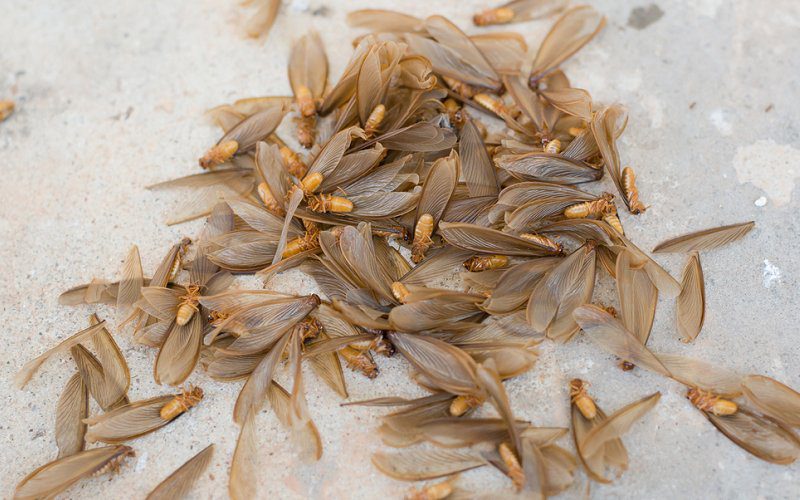
Finding winged termites, typically within window tracks, or screen doors and windows, could indicate possible termite problems. How to know if you have termites? Seeing these winged insects indoors is a strong sign.
Termites, once ready to mate, will develop wings and fly in an effort to relocate.
Flying termites are pretty obvious, you’ll often see them fly out from underneath the skirting boards to mate and start a new colony.
It’s a common misconception to believe termites don’t have wings and are often mistaken for flying ants, particularly when there has been no other indication of termites on the property and they suddenly appear in window fly screens.
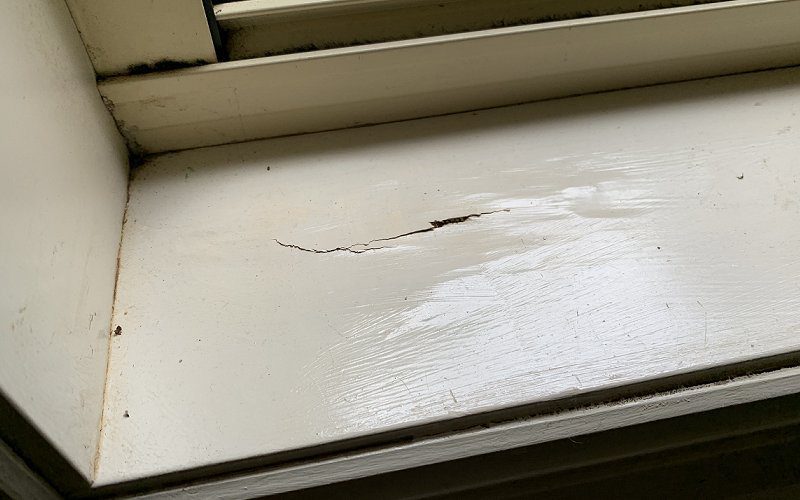
Another sign of termites or a potential termite infestation are softening of timbers or bubbling of painted timbers. The most common example of this is disintegrating skirting boards. Termites will often eat away at the entire skirting board, leaving only the outer paint layer, and while it looks fine and intact, a quick bump with the vacuum cleaner will reveal it’s completely hollow.
It might sound odd, but we usually ask customers, “Does it sound like you’ve put rice bubbles in a bowl and just poured milk on them?” and the general response is “Yes, that’s the exact sound!”
Termites can be heard at night, usually when it’s very quiet and everyone is in bed.
Hearing this is almost always an indication that termites are present — another way how to tell if you have termites without even seeing them.
Many Australian homeowners aren’t sure what termites actually look like, which makes it hard to confirm an infestation. Adult termites are typically 6-10mm long with soft, pale bodies. Unlike ants, termites don’t have a pinched waist between body segments. Worker termites (the ones causing damage to your home) are cream or white with a soft body.
Flying termites (alates) are darker in colour with two pairs of equal-sized wings. If you spot insects around your home and aren’t sure if they’re termites, it’s worth getting a professional identification rather than taking chances with your property.
Finding termites is stressful, but your first few actions matter. Do this:
From there, a licensed technician can trace the colony using Termatrac movement radar and thermal imaging, which detect termites hidden inside walls and subfloors that no visual check can reveal. Once the activity is mapped, our team recommends an effective termite treatment plan (link to /termites/termite-treatment/) matched to your home and how it is built.
If you have seen any sign of termites, book a termite inspection across Brisbane, the Gold Coast, Logan and Tweed Heads, and we will arrange a time.
If you discover any signs of termite activity around your home we can help with an affordable and effective termite treatment solution specifically suited to your home.
Call us today, and one of our friendly technicians will help you schedule an inspection.
Our focus areas include Brisbane, Gold Coast, Tweed Heads & Logan.
We look forward to working with you.
How do I know if I have termites?
Watch for mud trails on walls, stumps and piers, dark stains or blistering on internal walls, winged termites indoors, skirting boards that sound hollow when tapped, and a faint clicking inside the walls at night. Any one of these is enough reason to arrange an inspection.
What are the first signs of termites in a house?
The earliest signs are usually thin mud tubes on exterior walls or piers, and small blistered or stained patches on internal walls near wet areas, often well before any timber damage is visible.
What does termite damage look like?
It often hides behind a normal-looking surface. Tap timber and listen for a hollow or papery sound, and look for bubbling paint over skirting boards and architraves, spongy floors, and doors or windows that suddenly stick. Termites eat timber from the inside out, so visible damage usually means the problem is already established.
Can you see termites in your house?
Usually not. The workers that cause the damage stay sealed inside timber, walls and the subfloor, so you are far more likely to see the signs they leave than the termites themselves. Radar and thermal imaging are used to confirm hidden activity.
How do you check your house for termites?
Walk the perimeter looking for mud trails on brickwork and piers, tap skirting boards and architraves for a hollow sound, and check wet areas and the subfloor for damp or mud. A DIY check is only a starting point, though, because the worst activity happens out of sight inside walls and floors.
Are white ants the same as termites?
Yes. White ants is the common Queensland name for termites. They are a different insect from true ants, with soft, pale bodies and no pinched waist.
 5.0
33 reviews
 4.7
55 reviews
