Australian operated
Got a Pest Problem? Call Us Today →
 1300 915 743
Australian operated

Free on-site visit & quote

Over 14,000+ homes protected

5/5 stars is most frequent rating
A termite inspection and treatment are the fastest way to deal with an active infestation. A termite bait system does something different: it provides early detection and ongoing protection, intercepting termites before they ever reach your home. That is why so many Queensland homeowners use baiting as a long-term, preventative layer of defence. Here is how it works, whether it is safe, and how it compares with the alternatives.
How termite bait stations work, in brief

A termite bait system works with the natural behaviour of termites rather than against it. Unlike a quick-knockdown spray, bait stations are designed to use the colony’s own habits to destroy it at the source.
The key is that termites are social insects that share food. When foraging workers find the bait and feed on it, they carry it back and pass it through the colony as they feed and groom each other. That means a single station can affect thousands of termites, including the queen, which is what ultimately eliminates the nest. It is a slower approach than a barrier, but it removes the colony instead of simply blocking it.
What makes professional baiting so effective is a simple three-step process.
1. Termites are drawn to the station. We place Tasmanian oak inside the station, a timber termites find especially appealing because of its cellulose. Our technicians also add an attractant called Focus, which draws termites in from up to around 3 metres away and lasts about a month, giving plenty of time for a strong feeding population to establish.
2. A growth regulator is introduced. Once feeding is active, the station is loaded with an insect growth regulator. Termites are attracted to it as a food source, but it stops them from moulting their exoskeleton, which they must do to grow. Unable to moult, they cannot develop or reproduce.
3. The colony collapses. The affected termites carry the regulator back to the nest and spread it through the colony as they share food. Over the following weeks the colony dies off, and because future generations cannot develop either, the nest does not simply rebuild.
A termite bait system operates on the social nature of these pests. When foraging termites find the bait, they carry it back to their colony, effectively spreading the treatment throughout the nest. This means a single termite baiting station can impact thousands of termites, including the queen, resulting in colony elimination.
Do termite bait stations work? Research and practical application have shown they are highly effective when properly installed and maintained. Unlike chemical barriers that simply block entry, termite bait stations actively attract and eliminate the problem at its source.
As most property owners know, there are several different methods available for the treatment of termites. Options range from chemical treatments and termite barriers, through to physical barriers and, of course, baiting systems.
Aside from cost, typically it’s the property type that determines which type of treatment is most suited. For instance, because termite baits aren’t actually physically connected with a building or structure, they’re more commonly used on split-level or pole-built homes. This is due to the property being raised above the ground, where traditional barriers would be ineffective.
Termite bait stations themselves are approximately 30cm long in length and look like vented cylindrical tubing. Each termite trap is fitted with a lockable cap for safety, which contains small ventilation grills at the top. Termite baiting stations are buried down into the ground, with the very top of the trap sitting flush with the soil.
Traps are placed this way for the following reasons:
Termite baiting is one of the safer options for households concerned about children, pets and wildlife. Each station sits below ground with a locked cap, so the contents are not exposed. The growth regulator works only on insects that moult an exoskeleton, so it is targeted at termites rather than mammals or birds. Used as directed and maintained by a licensed technician, a bait system is designed to be safe for your family and pets, and far more contained than a broad spray across the yard.
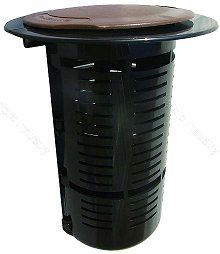 Termite baits themselves are approximately 30cm long in length, and look like vented cylindrical tubing. Each trap is fitted with a lockable cap for safety which contains small ventilation grills at the top. Termite bait stations are buried down into the ground, with the very top of the trap sitting flush with the soil.
Traps are placed this way for the following reasons.
What makes termite baiting systems so highly effective is the fact that they’re actually part of a simple 3-step termite-killing process.
That process is as follows –

Obviously, the first part of the process is to attract any nearby termites to the termite bait stations. This is achieved by placing Tasmanian Oak timber into the traps, which termites consider an attractive food source. Timber has cellulose in it, which termites eat and digest, with the help of protozoa and microbes in their guts. However, some cellulose material is more attractive than others, with termites favouring Tasmanian Oak.
In addition to the timber, our pest control technicians add an attractant called Focus, which has the ability to draw termites in from distances of up to 3 metres away. Enough focus is added to last up to a month, which gives enough time for a large number of termites to become attracted to the termite trap. This method allows us to detect any early signs of termite activity around your property and prepare the next step of the process.
Once the traps have attracted a large amount of termites, they are then filled with an insect growth regulator called Hexaflumuron which destroys the termites exo-skeleton. Hexaflumuron takes on a pasty texture, once mixed with water (Hexaflumuron in its raw state is powder like)
Hexaflumuron contains cellulose, which again termites are attracted to as what they believe to be a viable food source.
Hexaflumuron once digested does 2 things –
Infection of the main colony or nest happens in two ways.
The final blow to the colony comes when the termites are unable to moult their exo-skeletons to make way for new growth. This of course means that that not only are existing termites eradicated, but also any future generations as they cannot reproduce.
As you can see, this is a highly effective method that once in place, works extremely well.
When it comes to baiting stations, customers typically sign up for 12 month contract. This provides the customer with –
Installation of a typical termite bait system for a standard 3 bedroom home, on a regular sized block can usually be completed within a day by a sole pest control technician. Usually the traps are set beneath the ground every 3 meters apart, strategically placed around the outer edge of the property. As the traps sit flush with the ground surface, they are virtually unnoticeable, which means no ugly boxes or obstructions in the yard.
Each month, customers receive an SMS notification or phone call to remind them that their inspections are due. It’s imperative that each termite bait station is inspected once a month to detect any potential activity.
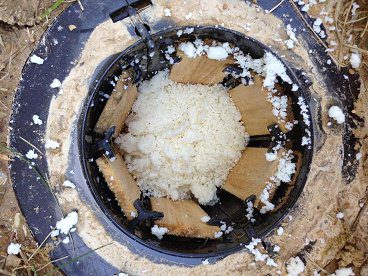 Upon inspection, we check the baits and fill in a service form, so that we know exactly the state of every trap on the property. In the second and third years, traps are usually checked every eight weeks. Continual vigilance is vital, as termite colonies are constantly moving through the ground, so it’s common for a home with a termite bait system to have three or four different hits a year, from a number of different termite colonies.
Termite bait systems can last for up to 10 years, making them an ideal investment for those who seek a viable long term, more permanent option.
In other words, termite baiting systems act as a long term “alarm system” for termites. If termites are actively feeding in the traps, it’s likely they’ve established a nest nearby, which allows us to take swift and immediate action.
Alternatively, if the baits continue to be clear, customers can rest easy knowing that their property will be safe from any potential infestations.
You can buy hardware-store bait stakes, and plenty of homeowners search for a do-it-yourself option. The problem is that baiting only works when it is done properly, and that is where DIY tends to fall down. Effective baiting depends on correct placement along termite travel paths, the right attractant to pull termites in, precise timing of the growth regulator once feeding is established, and consistent monthly monitoring. Miss any of those and termites simply forage elsewhere, often straight past an untouched stake and into your home, while you believe you are protected.
A professional program removes that risk. It also means a trained eye is checking your property regularly, which is often how activity gets caught early. If you are weighing it up, our comparison of the leading systems, Exterra vs Sentricon, is a good next read.
A typical bait system for a standard home can usually be installed in a day. Stations are set into the ground roughly every 3 metres around the perimeter, sitting flush with the surface so there are no boxes or obstructions in the yard.
From there it is about monitoring. Stations are checked monthly in the first year, then around every eight weeks in later years, and you get an SMS or call when each check is due. That ongoing vigilance matters, because colonies are constantly moving through the ground, and it is common for a protected home to record several separate hits a year from different colonies. In effect, the system acts as an alarm: if termites are feeding in the stations, there is a nest nearby and we can act straight away, and if the stations stay clear, you have peace of mind. A well-maintained system can keep working for up to 10 years. You can read more about the checking schedule in our guide to how often bait stations should be checked.
Our warm, humid climate keeps termites active for much of the year, and activity climbs after wet spring weather. That is exactly why a set-and-forget approach is risky here, and why regular monitoring is the real value of a bait system for homes across Brisbane, the Gold Coast, Logan and Tweed Heads.
Do termite bait stations really work?
Yes, when they are installed and monitored correctly. Because termites share food, the treatment spreads through the colony and eliminates it at the source, including the queen. The key is professional placement and regular checking.
Are termite bait stations safe for pets and children?
They are designed to be. Stations are locked and buried below ground, and the growth regulator only affects insects that moult an exoskeleton, so it is targeted at termites rather than pets, children or wildlife when installed and maintained correctly.
How long do termite bait stations take to work?
Baiting is deliberately slow. It can take several weeks to a few months to eliminate a colony, because the treatment relies on termites spreading it through the nest over time rather than killing on contact.
Are DIY termite bait stations worth it?
Rarely. Shop-bought stakes depend on correct placement, attractant, timing and ongoing monitoring to work, and without those termites simply forage around them. A professional system removes that risk and includes regular inspections.
Termite baiting or a termite barrier: which is better?
It depends on your home. A barrier suits most standard slab construction, while baiting often suits raised or split-level homes and adds early detection. Many homes use both. An inspection will confirm the right approach.
How often do termite bait stations need checking?
Monthly in the first year, then around every eight weeks after that. Regular checks are essential, because termite colonies move constantly and a station can be hit at any time.

Pest-Ex has protected more than 14,000 homes across South East Queensland and Northern NSW since 2006, and we are a Rentokil company. If you want early detection and long-term protection, our team can design a termite bait system around your property, or start with a termite inspection to check your home first. Contact us for a free on-site quote.

 5.0
33 reviews
 4.7
55 reviews